


Quick Summary
Yopo seeds come from Anadenanthera peregrina, a tropical tree with deep ethnobotanical significance in parts of South America and the Caribbean. Today, collectors, educators, and students of plant traditions may keep the seeds as labeled botanical samples for cultural study, display, and preservation. Responsible ownership requires accurate identification, secure storage, respect for Indigenous history, and strict attention to product warnings and local rules.
Yopo seeds are the seeds of Anadenanthera peregrina, a tropical tree native to northern South America and parts of the Caribbean. They are known primarily through ethnobotanical history, where Indigenous communities have understood the plant within structured ceremonial, spiritual, and cosmological traditions. At Professor Seagull’s Smartshop & Gallery, we treat Yopo as a culturally meaningful botanical specimen – not a novelty item, supplement, or casual-use product.
The Botanical Identity of Yopo
Anadenanthera peregrina belongs to the legume family and develops flat seed pods containing hard, rounded seeds. The tree is adapted to warm tropical and subtropical environments and may reach a substantial size under suitable conditions. Accurate scientific identification matters because common names can shift across regions, languages, and sellers.
A reliable label should use the accepted botanical name, Anadenanthera peregrina, rather than relying only on “Yopo.” This helps collectors separate the species from related plants and preserve accurate records in an educational or ethnobotanical collection.
Why Yopo Has Cultural Significance
Yopo has a long history in Indigenous traditions across parts of the Orinoco basin, the Caribbean, and surrounding regions. Its meaning cannot be reduced to a single effect or internet description. Traditional plant relationships are embedded in community knowledge, ceremony, language, ancestry, and specific cultural responsibilities.
Responsible writing should acknowledge that history without turning it into a modern instruction manual. Cultural context belongs at the center of any discussion about Yopo. Curiosity is welcome, but it should travel with humility and a willingness to learn from credible historical, botanical, and Indigenous sources.
Why Do People Collect Yopo Seeds Today?
Ethnobotanical Study
Students of ethnobotany may keep Yopo as a reference specimen while studying how communities have used, classified, and understood plants over time. A labeled archive can record the scientific name, region of origin, purchase date, source, and intended purpose without encouraging restricted or unsafe use.
Botanical Display and Cultural Education
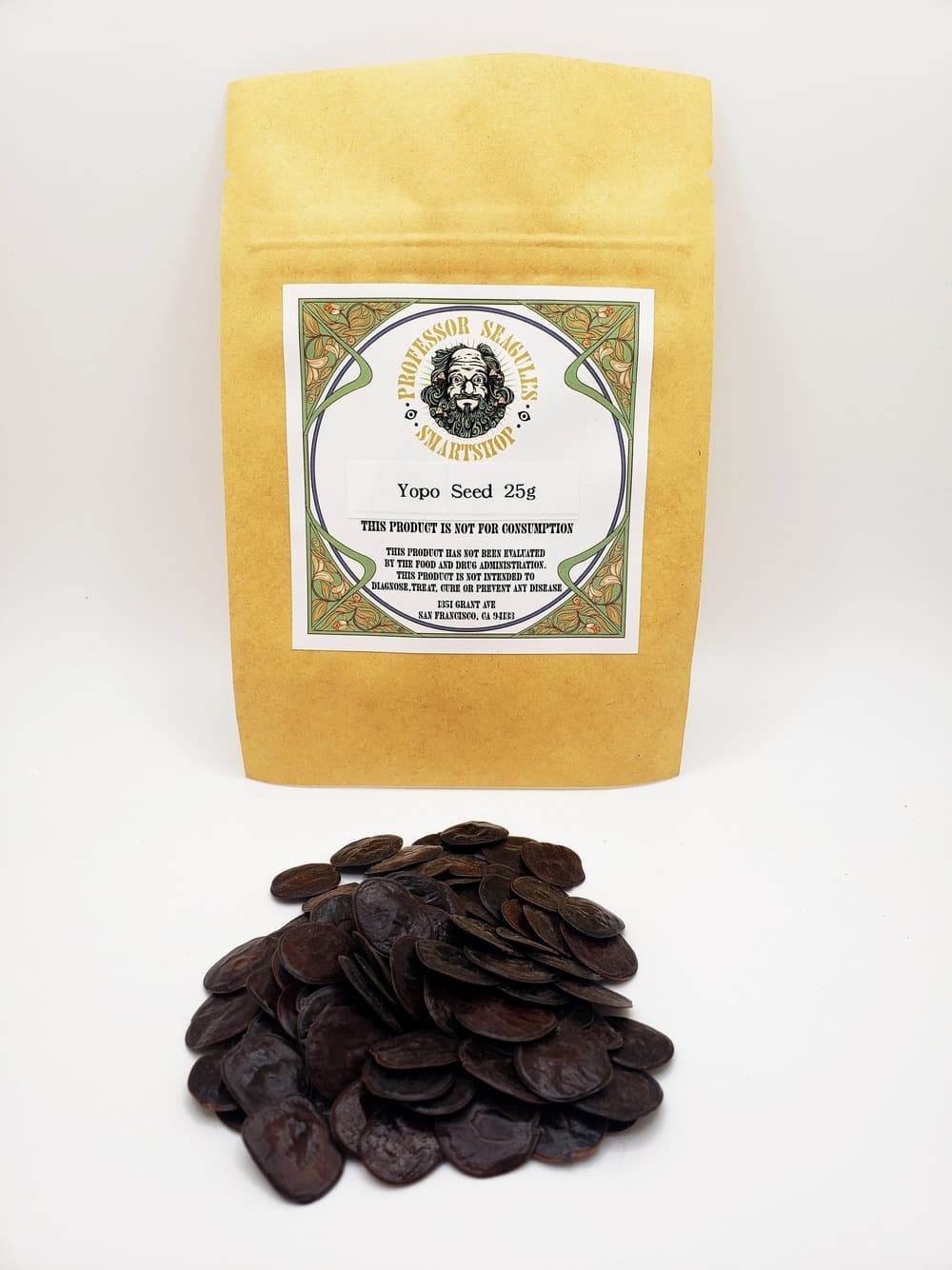
The seeds have a distinctive appearance and can be placed in a sealed specimen jar, educational display, or carefully documented collection. Context is important. A display should identify the plant clearly and explain that the specimen is not food, medicine, or an ordinary garden seed.
Interest in Rare Plant Traditions
Some collectors explore Yopo alongside other live plants and seeds connected to herbal, ceremonial, or historical traditions. Comparing botanical forms and cultural records can deepen plant literacy while keeping the focus on education, preservation, and respectful inquiry.
What High-Quality Identification Looks Like
Quality begins with identity, not marketing language. A responsible seller should name the species, describe the item’s intended purpose, state important warnings, and package the seeds in a way that protects them from contamination and moisture. Vague labels, miracle claims, or coded promises are reasons to walk away.
Visual uniformity can be useful, but appearance alone cannot confirm botanical identity. Natural seeds may vary somewhat in size, tone, and surface texture. Documentation, careful sourcing, and a seller’s willingness to communicate clear restrictions matter more than a polished photograph.
Collectors should also distinguish between cosmetic condition and meaningful quality. A seed can show natural marks or variation and still remain a valid reference specimen. Conversely, perfectly staged photographs do not compensate for missing botanical names, unclear quantities, or absent warnings. The strongest listings connect the physical sample to dependable records, allowing future viewers to understand what they are seeing and why the specimen was collected. That recordkeeping also prevents confusion when a collection grows, moves, or changes hands years later. Clear labels preserve context.
Yopo Seeds Are Not a Dietary Product
The Yopo seeds offered by our shop are botanical samples for collection, education, contemplation, and cultural study. They are not intended for ingestion or casual experimentation. We do not give dosing, preparation, extraction, therapeutic, or medical advice.
This distinction should remain visible after purchase. Keep the original label with the specimen, do not transfer loose seeds into an unmarked container, and never store them beside food, supplements, spices, or ordinary edible seeds.
How to Store a Botanical Sample Responsibly
Store Yopo seeds in a sealed, clearly labeled container away from direct sunlight, excessive heat, humidity, children, and pets. A small archival envelope inside a rigid container can protect the sample while preserving its identifying information. Clean, dry storage also makes it easier to monitor the specimen over time.
If the packaging becomes damaged or the label is lost, isolate the sample until it can be identified. Wash your hands after handling unfamiliar botanicals and avoid touching your face or preparing food at the same time.
Legal and Ethical Considerations
Plant laws and shipping restrictions can differ among states and local jurisdictions. Agricultural rules may also apply to seeds and live plant material. Buyers should review current regulations before ordering, possessing, transferring, displaying, or attempting to cultivate any ethnobotanical species.
Our community-centered botanical space brings plant education, art, harm reduction, and North Beach counterculture under one roof. That mix comes with a simple responsibility: be honest about what a product is, respect its boundaries, and do not turn cultural history into reckless marketing.
Explore Yopo With Professor Seagull’s Smartshop
Adults interested in lawful botanical collection can review our yopo seeds for sale and read the full product description before ordering. The listing identifies Anadenanthera peregrina as a collection item, includes handling warnings, and explains that the seeds are not intended for human consumption.
Contact us today for more details!
FAQs
Where Do Yopo Seeds Come From?
Yopo seeds come from Anadenanthera peregrina, a tropical tree native to parts of South America and the Caribbean.
Why Do Collectors Keep Yopo Seeds?
Collectors may keep them as labeled botanical specimens for ethnobotanical study, educational display, cultural research, or preservation of plant-history records.
Are Yopo Seeds Intended for Human Consumption?
No. The Yopo seeds offered by Professor Seagull’s are sold as botanical samples for collection and educational purposes, not for human consumption.

 Previous
